Table of Contents
A structured transformation narrative for public institutions and enterprise-scale organizations
This whitepaper is designed as a boardroom-ready document: strategic enough for CXOs, technical enough for architects, and practical enough for decision makers who need a clear path from legacy complexity to modern, governed platforms.
Page 2
- Executive SummaryWhy transformation is urgent
- Industry Context & ChallengesLegacy, regulation, fragmentation
- Transformation VisionFuture state operating model
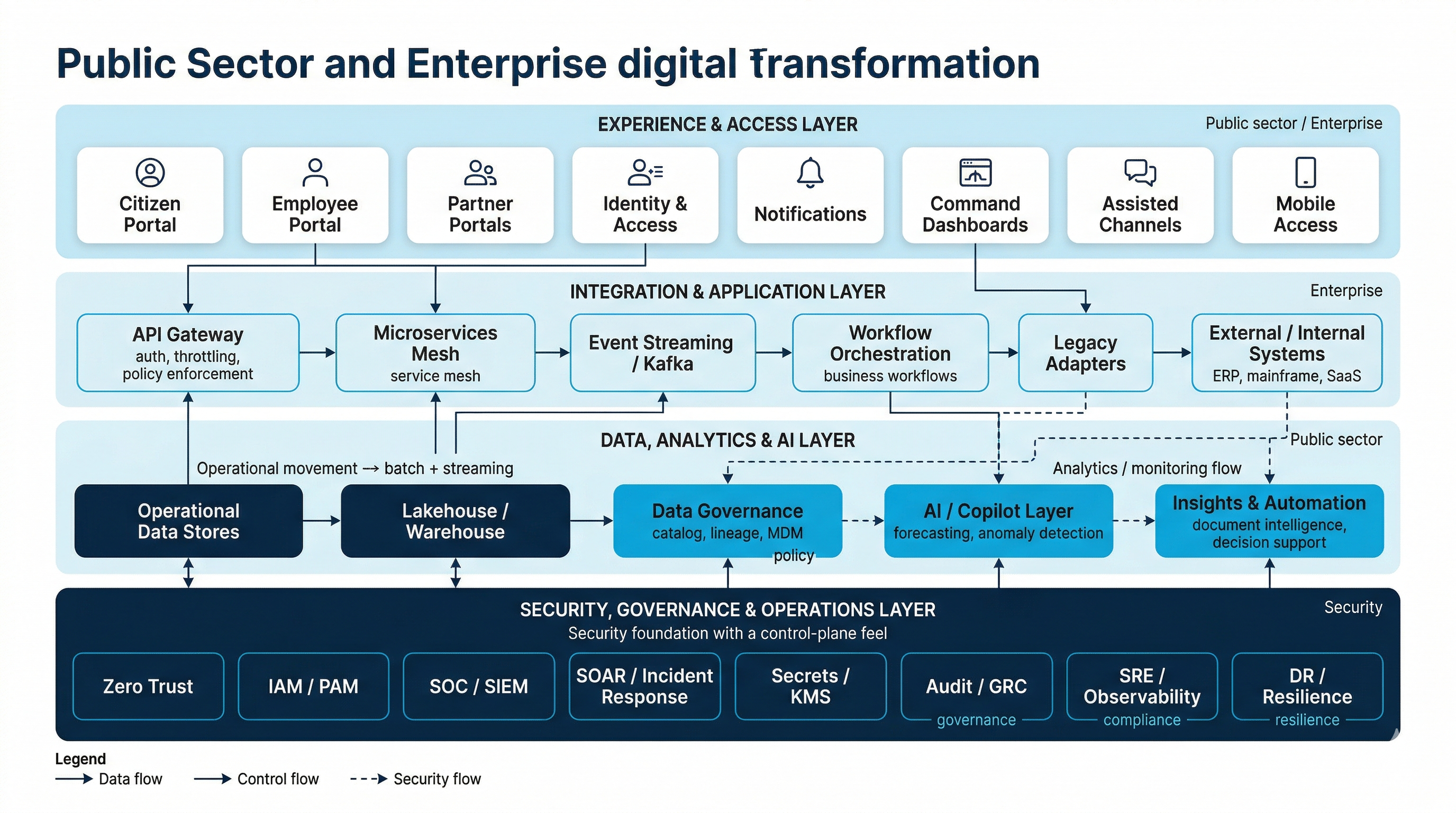
- Technical ArchitectureHybrid, sovereign, AI-ready
- Solution Building BlocksPlatform, data, security, automation
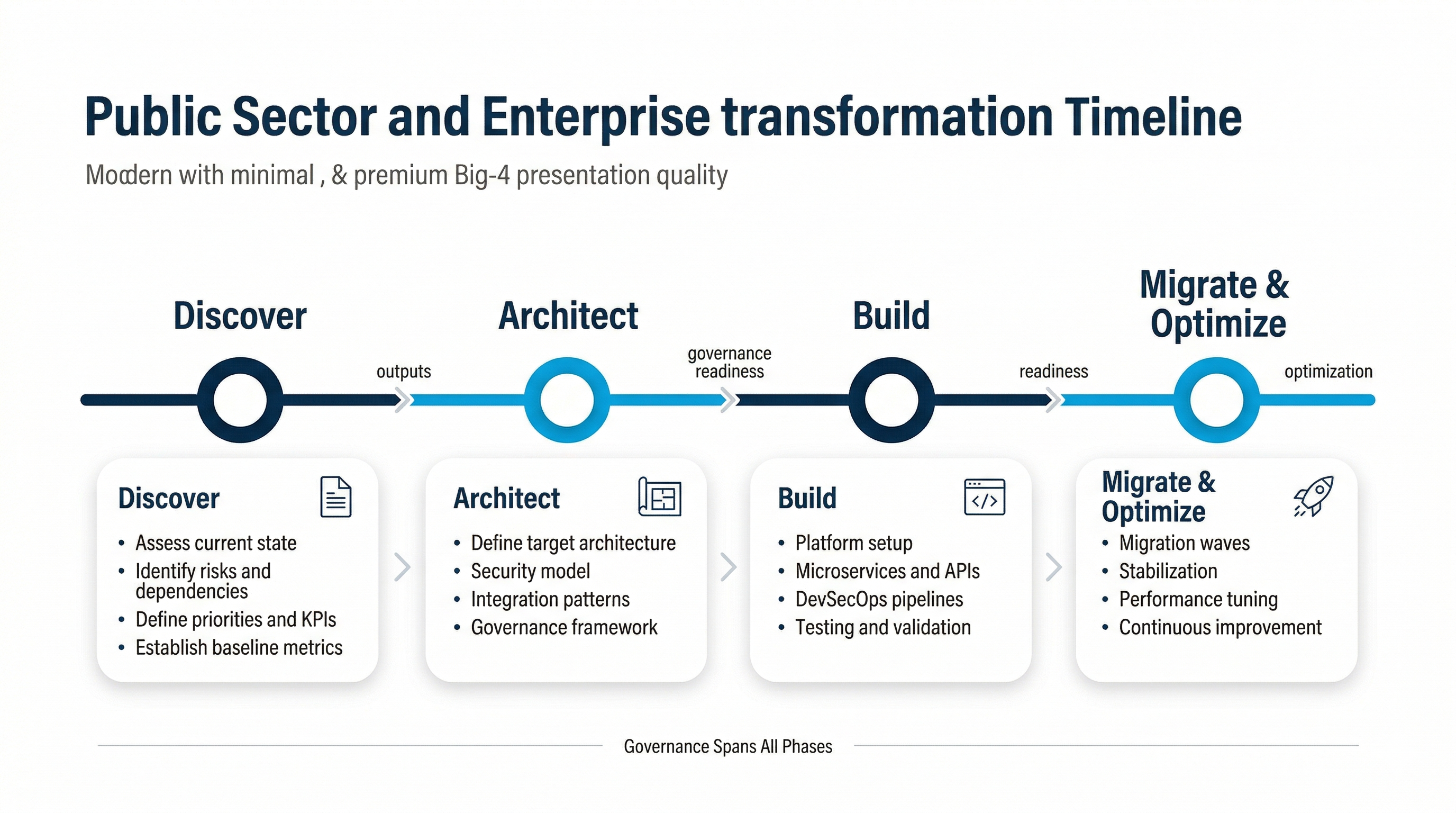
- Implementation ApproachDiscovery to optimization
- Use Cases / Industry ScenariosPublic sector and enterprise scenarios
- Business ImpactCost, agility, resilience, trust
- Why OptiValue TekCapabilities, accelerators, differentiators
- Engagement ModelDelivery, governance, operating model
- Conclusion & Next StepsHow to proceed
01
Whitepaper intent
This paper is intentionally extensive, strategic, and implementation-oriented.
The narrative goes beyond summary and explains how public-sector and enterprise organizations can modernize with
sovereign deployment patterns, secure integration fabrics, AI-assisted operations, and modular delivery models.
Smart GovernmentCitizen ServicesEnterprise PlatformsDigital Governance
Security & ComplianceData & AI